


The Emptiness Beneath the Empire: Colonialism, Trauma, and the Long Way Home

I have spent a significant portion of my life sitting with people in their most broken places. In hospital rooms where death was making its slow and certain approach. In therapy offices where the accumulated weight of a lifetime finally became too heavy to carry alone. In communities where the wounds were so old and so deep that the people living inside them had stopped being able to see where the wound ended and where they began.
And in all of that sitting, across all of those years, I have come to understand something that I want to offer you today not as a political argument, not as an academic thesis, but as a clinical observation from someone who has looked into enough human eyes to know the difference between a person who is cruel and a person who is wounded:
The most dangerous human being is not the one who knows they are broken. It is the one who has built an entire civilization on top of the breaking, and called it progress.
This is a piece about colonialism. But more than that, it is a piece about what happens to the human soul, to any human soul, when it chooses domination over connection. Theft over belonging. The illusion of power over the terrifying and liberating work of knowing who you actually are.

It is, in the deepest sense, a piece about a wound so old it has forgotten it is a wound.
And it is written, as all of my work is written, in the belief that wounds, even the oldest, even the deepest, even the ones that have been mistaken for identity, can heal.
There is a violence in taking what is not yours.
But there is a deeper, more insidious violence in needing to take it. In the frantic, generations deep hunger that drives a person to carve their name into lands that do not belong to them. To steal songs from tongues they have silenced. To wear the skin of cultures they have gutted like a costume, all while telling themselves this is power, this is destiny, this is the natural order of things.
When in truth it is the most desperate kind of poverty.
The poverty of a soul that has forgotten itself.
Neuroscience, when we are brave enough to apply it honestly to history, whispers the truth beneath the grand narratives of empire: the brain cannot sustain such dissonance without breaking itself. To stand atop the bones of the slaughtered and call it progress, to kneel in the ashes of burned villages and call it civilization, requires a systematic dismantling of the very neural architecture that makes us capable of recognizing each other as human.

The anterior cingulate cortex: that quiet, essential part of the brain that registers moral conflict, that sounds the internal alarm when our actions contradict our values, must be methodically drowned out. The mirror neurons, those delicate and extraordinary bridges of empathy that allow one human being to feel the experience of another, must be starved into silence. The prefrontal cortex, the seat of our highest reasoning and our deepest humanity, must be hijacked by something far older and far more ravenous: the fear of being nothing, of being no one, of facing the yawning void where identity should have been.
This is not a description of a monster. This is a description of a traumatized nervous system that was handed a story about dominance so early, so completely, and so consistently that it became the only story available.
It is, in the most precise clinical sense, an attachment wound wearing the costume of power.
Because here is what the history books rarely tell us, and what I believe is the most important key to understanding how we got here and how we find our way out:
Whiteness, as a constructed identity, is not a culture. It is an absence where culture used to be.
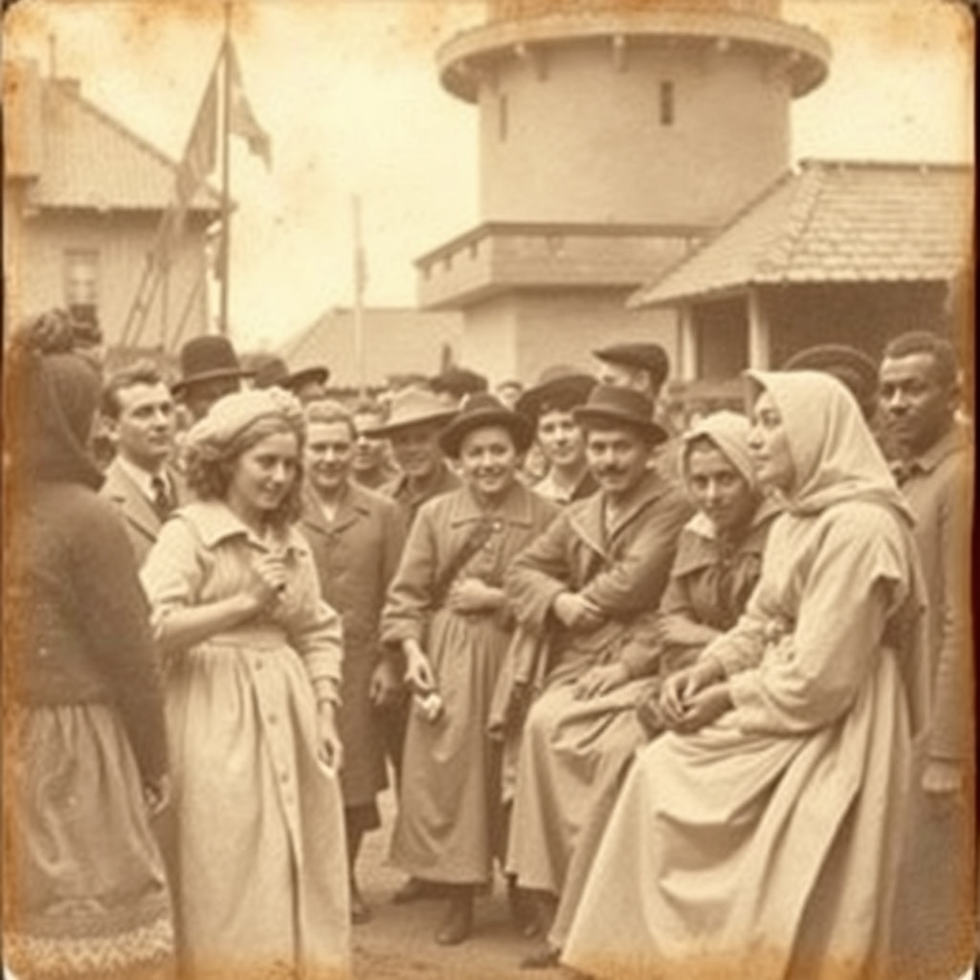
Think of the Irish child beaten in the schoolyard for speaking Gaelic, the language of his grandmother, the carrier of his people’s poetry and prayer and particular way of understanding the sacred. Until the silence became automatic, became survival, became the only way to belong. Think of the Italian grandmother who tucked her dialect into the back of her throat like a shameful secret, who learned to laugh differently so her laugh would not give her away. Think of the Polish laborer who scrubbed the history from his name along with the soil from his hands, all in service of a lie that told him he could ascend into the myth of supremacy if only he severed himself completely from everything that had ever made him whole.
And what was left?
A man who could not remember his grandfather’s lullabies. A woman who flinched at the sound of her own laughter. A people stripped of their rituals, their stories, their ceremonies, their belonging. And left with nothing but the cold weight of dominance to fill the silence where identity used to live.
This is the mechanism that epigenetics is now helping us understand with a precision that our ancestors intuited through story and ceremony long before the laboratories caught up: trauma transmits. The severing that happened to one generation becomes the inheritance of the next. The grief that was never allowed to be grieved becomes the anxiety that has no name. The culture that was destroyed to feed the machine of whiteness becomes the hunger that can never quite be filled. A hunger that turns, generation after generation, toward the very people who were most fully dispossessed, trying to consume what it could not create.
This is why cultural appropriation is not, at its root, a story about disrespect. It is a story about starvation. About a people so emptied of their own cultural nourishment that they reach compulsively toward the cultures of others. Not in admiration, but in desperation. Taking the drum and stripping its spirit. Taking the dance and mocking its roots. Taking the music and flattening its resistance into entertainment.
Hip-hop was never just music. It was the coded rebellion of the redlined and the refused, the sound of basement parties where the long arm of oppression couldn’t reach, the rhythm of a people who turned their pain into poetry and their survival into art and their resistance into a language so alive and so human that it became the most influential cultural force on the planet. When that language is lifted from its roots without understanding or reverence, what is taken is not just a song. What is taken is the meaning. The defiance. The specific and sacred alchemy of suffering transformed into beauty by people who had every reason to stop creating and chose, again and again, to create anyway.

The colonizer does not know who he is. So he becomes a scavenger.
And with every theft, he tells himself: “this makes me real, this makes me whole.” But the opposite is true. The more he takes, the emptier he becomes. Because you cannot fill a soul-shaped wound with someone else’s culture. You can only deepen the emptiness by mistaking consumption for connection.
Here is the truth I want to offer with every ounce of compassion I have, because I have sat with enough broken people to know that compassion is not the enemy of honesty. It is the only thing that makes honesty survivable:
The colonizer is not the most powerful person in the room.
He is the most dispossessed.
He sits atop mountains of accumulated wealth and stolen beauty and cannot answer the simplest and most essential question a human being can be asked: “Who are you without the things you’ve taken?”
The answer terrifies him. Because beneath the looted art and the appropriated style and the performed confidence of dominance, there is only the wound. The generations of love he was never taught to give or receive, the belonging he was severed from before he was old enough to know what belonging was, the grief he inherited but was never given permission to feel.
He thinks he is feared.
In truth, he is the human being most in need of healing.
And the tragedy, the deep, unnecessary, still-unfolding tragedy is that the healing has always been available. It has always been right there, on the other side of the one thing the architecture of whiteness was specifically designed to prevent him from doing:
Feeling the full weight of what was done. In his name. Through his inheritance. And choosing, from that place of honest reckoning, to become something different.
This is where I want to bring in something that I believe with everything in me, as a psychologist and as a student of the human nervous system:
The brain is not stone. It is clay.
Neuroplasticity, the brain’s extraordinary, lifelong capacity to rewire itself in response to new experience does not stop at the edge of generational trauma. It does not stop at the border of cultural conditioning. It does not stop at the threshold of a history as long and as brutal as this one. The mirror neurons that were starved into silence can be reawakened. The anterior cingulate cortex that was drowned out by centuries of required dissonance can learn to speak again. The prefrontal cortex that was hijacked by the fear of nothingness can be slowly, relationally, somatically reclaimed.
But this rewiring requires something that guilt alone cannot produce. Guilt looks at the wound and looks away. What the nervous system actually needs. What the soul actually needs is reckoning. The willingness to sit in the full discomfort of the emptiness, to stop filling it with the cultures and the labor and the land of others, and to ask honestly: “what was taken from my own people in the making of this identity, and what would it mean to go back and grieve it?”
Europeans whose cultures were erased by the machine of whiteness must dig up their own buried traditions. Must grieve the Gaelic that was beaten out of the schoolyard. Must reclaim the ceremonies that were traded for the cold myth of supremacy. This is not self-pity. This is the necessary archaeology of a soul trying to find its way back to itself.
And restitution, the return of stolen land, stolen artifacts, stolen histories, stolen futures is not charity. It is not politics. It is, in the most literal neurological sense, healing. Giving back literally rewires the brain’s capacity for connection. The hand that learns to return what it has taken is a hand that is learning, for perhaps the first time in generations, what it feels like to be whole.

The wound is deep. It runs through centuries and bloodlines and nervous systems and the very architecture of the world we have all inherited, the colonized and the colonizer alike.
But it is not eternal.
The same brain that was wired for domination can be rewired for belonging. The same hands that built empires can learn to hold instead of take. The same lineage that carried the hunger of dispossession forward can choose, in this generation, to put it down.
This is the invitation at the heart of all the work we do at Nativ Elementz. Not to assign blame, not to sort the world into villains and victims, but to look clearly and compassionately at the inherited wounds that are driving the inherited behaviors, and to ask what becomes possible when we stop mistaking the armor for the person wearing it.
What becomes possible is everything.
A world where no one needs to steal because everyone remembers they already belong. Where no culture needs to consume another because it has found its way back to the nourishment of its own roots. Where the question “who are you without the things you’ve taken” is no longer terrifying because the answer “I am enough, I have always been enough, I was enough before the taking began” is finally, fully, known.
That world is not naive. It is not distant. It is not waiting for some future generation to build from scratch.
It is available right now, in every human nervous system still alive and still capable of choosing something different than what it inherited.
And that, beloved, is every single one of us.
~Nativ Elementz


Comments